First-Timer’s Guide to Ketchikan, Alaska
Ketchikan is one of the easiest places in Alaska to underestimate.
For many first-time visitors, it reads as a quick cruise stop: colorful buildings, a few gift shops, maybe a lumberjack show, then back on board. But Ketchikan has more depth than that. It is one of Southeast Alaska’s most layered towns, a place where rainforest, Native art, working waterfront life, and visitor energy all sit very close together.
This is a town best experienced with a little more intention.
If Juneau feels broad and scenic, Ketchikan feels compact, textured, and close-up. It is less about covering distance and more about knowing what you’re actually looking at. Totem poles are not just photo stops. Creek Street is not just a cute boardwalk. The rain is not bad luck. It is part of the place.
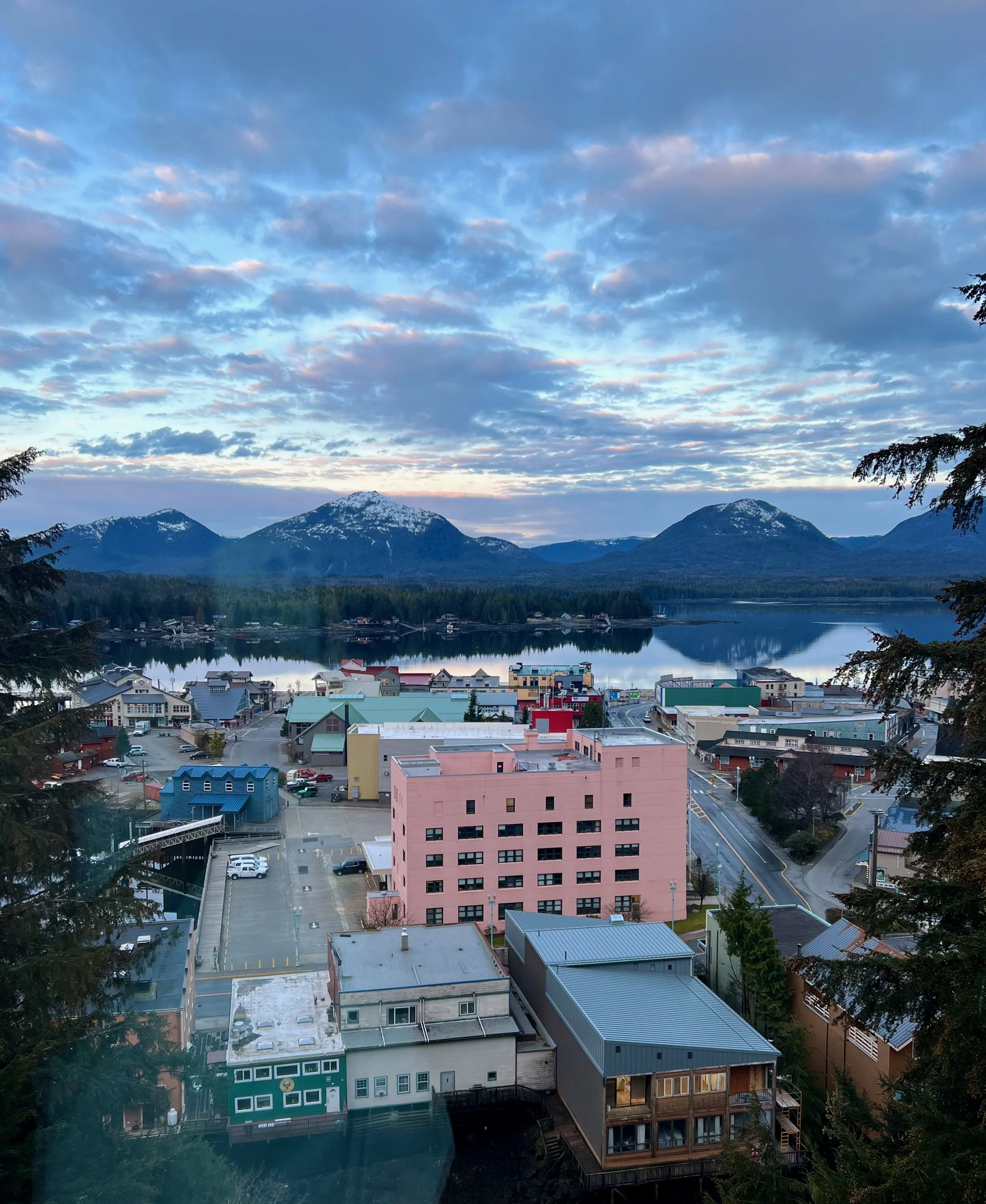
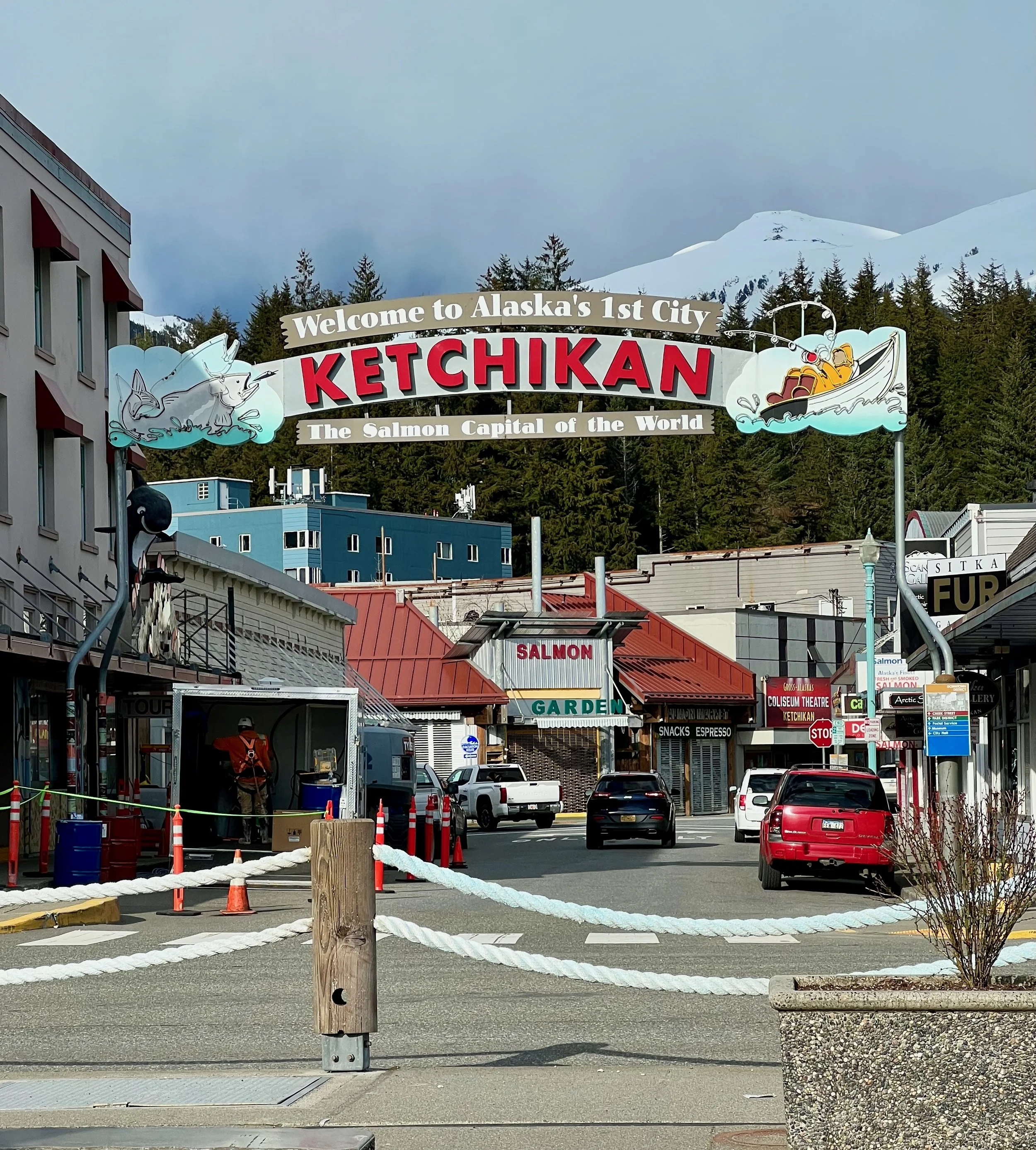
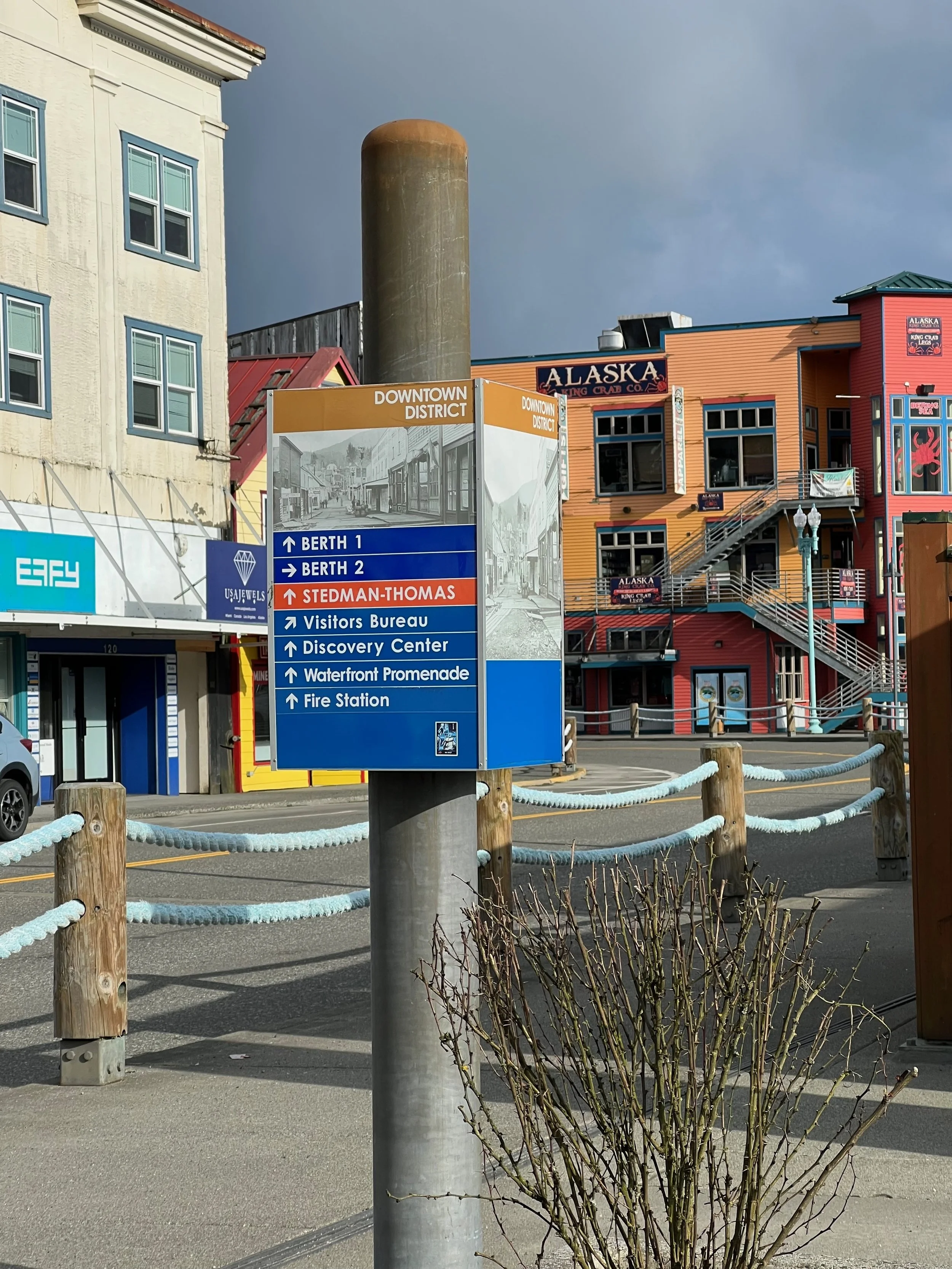
For first-timers, Ketchikan works best when you keep expectations simple: don’t try to do everything, don’t treat the downtown like the whole story, and don’t assume the weather determines whether the day is worth having. Downtown is notably compact and walkable, and much of what first-timers want to see sits close together.
Start here
Ketchikan is known for four things that first-time visitors should understand right away:
1) It is one of Alaska’s rainiest places. Ketchikan sits in a temperate rainforest, and that wetness is not a side note — it shapes the mood, the pace, and the look of the place.
2) It is deeply tied to Native art and carving traditions. This is one of the strongest ports in Alaska for travelers who want to spend part of the day engaging with totem poles and the cultural traditions behind them.
3) It is more walkable than many Alaska ports. You do not need a complicated plan to enjoy your first visit well.
4) It is not just a cruise stop. Ketchikan is a real coastal community stretched along the shoreline, with a strong working-waterfront identity and an airport that sits across the water on Gravina Island rather than in town.
What Ketchikan feels like
Ketchikan is less “big Alaska scenery at a distance” and more texture, water, wood, rain, and history at close range.
You feel it in the boardwalks.
In the carved poles.
In the creek running through town.
In the floatplanes overhead.
In the way the mountains rise so quickly behind the waterfront.
That is part of why Ketchikan photographs so differently from Juneau. It feels tighter, moodier, and more intimate. A first visit here is usually best when you lean into that instead of trying to force a checklist.
Best for first-timers
Ketchikan tends to work especially well for:
cruise passengers with one port day who want something easy to navigate
travelers interested in Native art, totem poles, and local history
people who prefer walkable waterfront towns to long transfer-heavy days
visitors who like atmospheric, rainy, forested places
photographers who enjoy detail, texture, and moody light
It may feel less compelling to travelers looking for one dramatic “must-do” landmark on the scale of a glacier helicopter landing or a major wildlife expedition. Ketchikan is more cumulative than singular. The day becomes good through a series of small, well-chosen experiences.
How much time do you need?
For most first-timers, one well-planned day is enough to get a strong feel for Ketchikan.
That said, the right amount of time depends on how you want to experience it:
If you have 4–6 hours:
Stay focused on downtown Ketchikan, Creek Street, one cultural stop, and a meal or coffee break.
If you have 6–8 hours:
You can comfortably combine downtown with a totem-focused experience like Saxman or another cultural stop, depending on transportation and timing.
If you are staying overnight or longer:
Ketchikan opens up more. You can move slower, explore beyond the immediate port area, and experience the town as a place rather than a stop.
Where first-timers should focus
If this is your first time in Ketchikan, these are the categories I would prioritize.
1. Creek Street
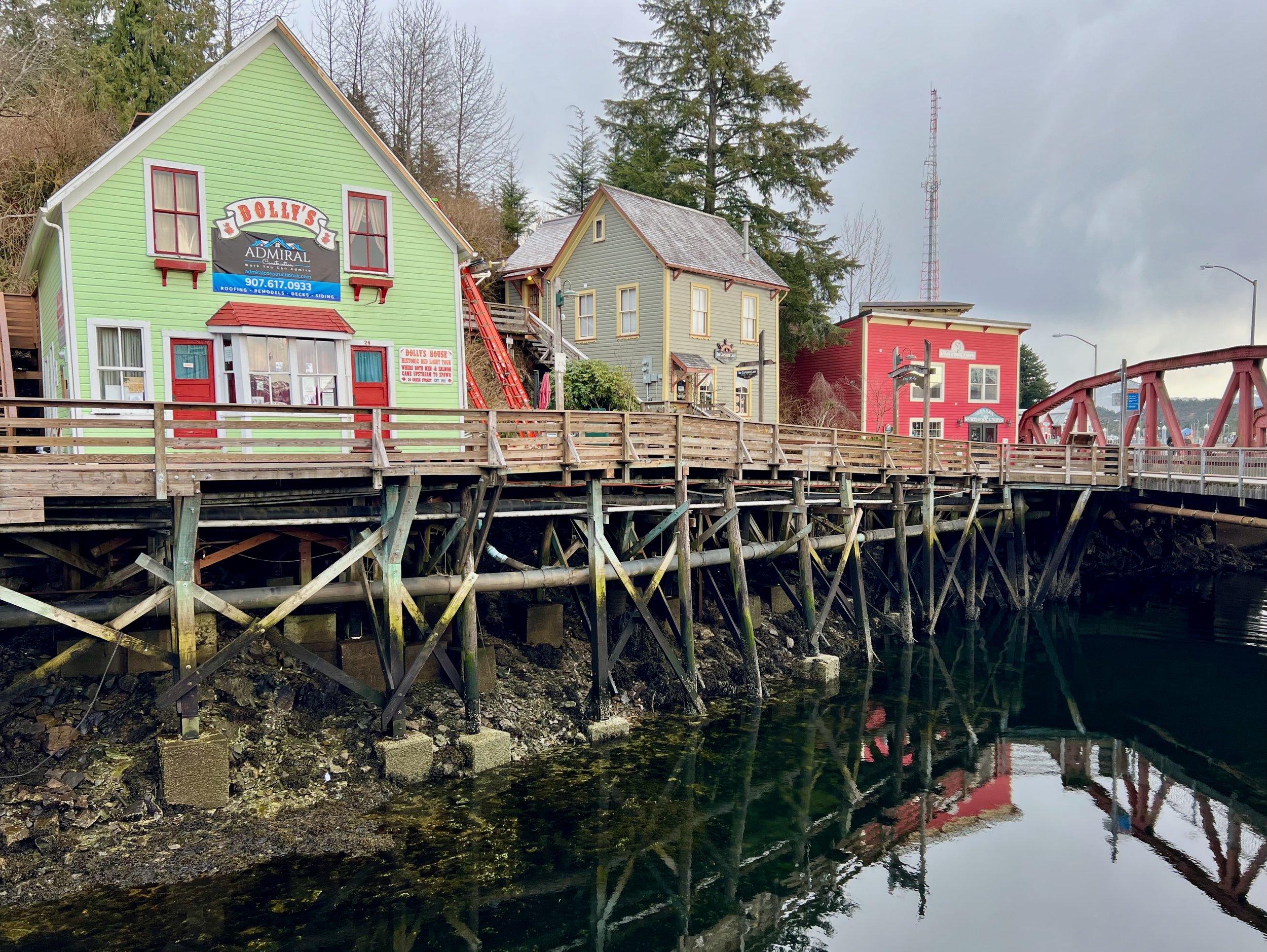
Creek Street is the obvious first stop, but it is still worth doing. It is one of the most recognizable places in town for a reason: colorful historic buildings on pilings, water moving beneath the boardwalk, shops and small stops layered into a compact stretch that feels distinctly Ketchikan.
Go for the atmosphere, not just the photo.
2. Totem culture and carving
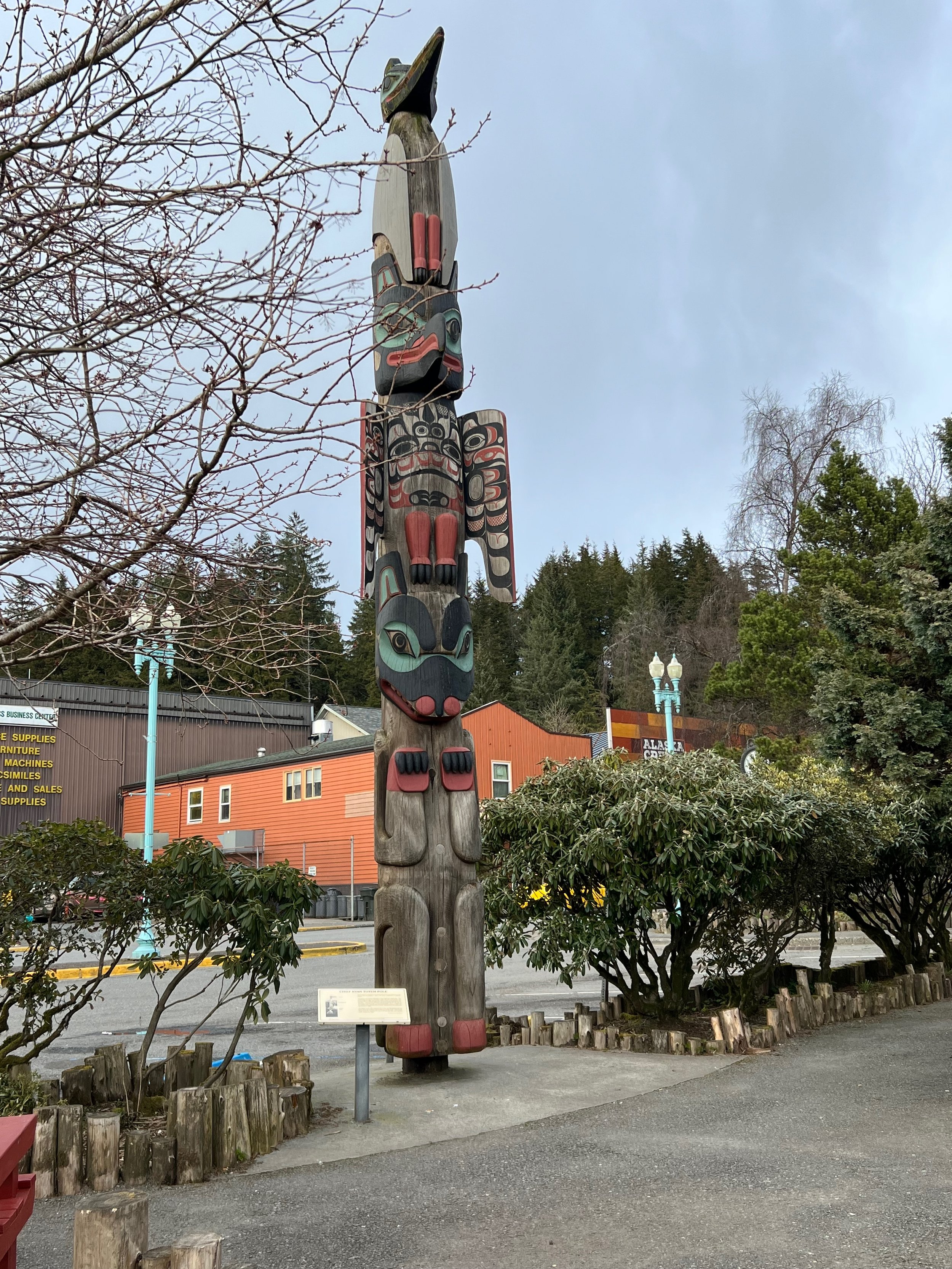
This is where first-timers can make their visit more meaningful. Ketchikan is one of the best-known places in Alaska to learn about totem poles and the cultural traditions behind them. If you only do one thing beyond walking downtown, I would strongly consider making it a totem-focused stop.
3. The working waterfront
Ketchikan is not polished in a generic coastal-town way. It still feels tied to fishing, marine traffic, and real waterfront use. That working edge is part of its character and one of the reasons it does not feel interchangeable with other cruise stops.
4. Rainforest context
Ketchikan makes more sense when you remember where you are: the Tongass. If you have time, a forest- or culture-oriented stop adds context and helps the town feel bigger than the immediate downtown strip.
Unique Ketchikan experiences worth considering
If this is your first visit, there are two classic Ketchikan experiences you will likely see come up again and again: the Great Alaskan Lumberjack Show and the Bering Sea Crab Fishermen’s Tour aboard the Aleutian Ballad.
Both are well-known for a reason. The question is less whether they are “worth it” and more what kind of day you want to have.
The Great Alaskan Lumberjack Show
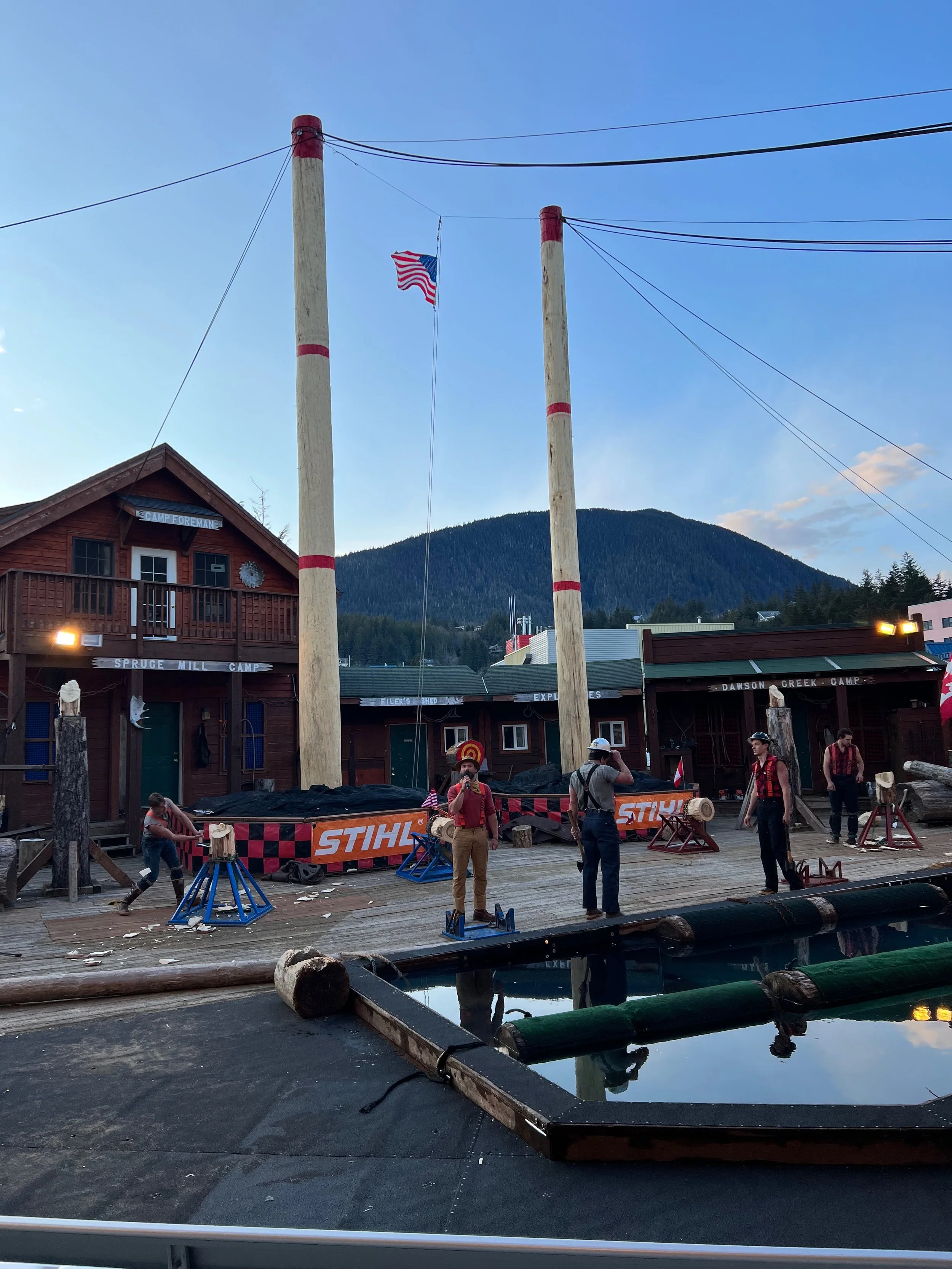
The lumberjack show is the more playful, easy-to-fit-into-your-day option. It is energetic, accessible, and unmistakably visitor-friendly — the kind of experience that leans into Ketchikan’s frontier character in a way that is fun rather than serious. Visit Ketchikan describes it as a live competition-style performance with chopping, sawing, axe throwing, log rolling, and speed climbing.
For first-timers, this is a good choice if you want:
something light and entertaining
an easy add-on to a port day
an experience that works well for families or mixed-age groups
a classic Ketchikan stop that does not require much planning energy
It is not the most layered way to understand the town, but it can absolutely be part of a good first visit.
The Bering Sea Crab Fishermen’s Tour
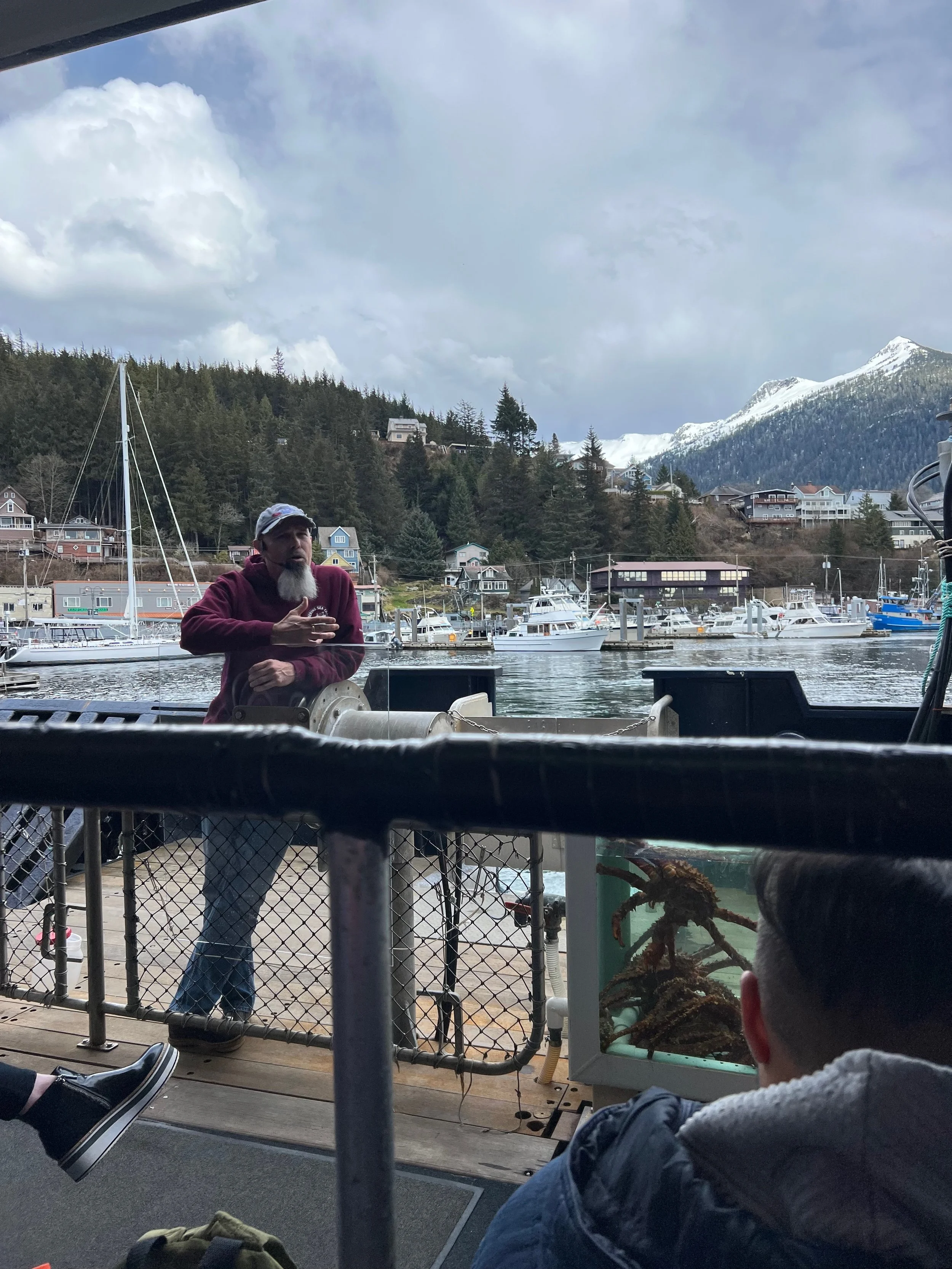
The crab tour is the more immersive maritime option. It takes place aboard the Aleutian Ballad, the commercial fishing vessel made famous through Deadliest Catch, but the actual experience is more educational and place-based than the television angle might suggest. The operator describes it as an interactive tour led by real Bering Sea fishermen, focused on marine life and the realities of life at sea.
For first-timers, this is a strong choice if you want:
something more distinctive than a standard sightseeing stop
a closer connection to Alaska’s maritime identity
an excursion that feels memorable and specific to place
a better fit for the working-waterfront side of Ketchikan
This one adds more depth to the day, especially if you are drawn to boats, fishing history, or the coastal life that shaped this town. The tour is also actively advertising 2026 availability, and its prep information lists a three-hour experience departing from Berth 3 in Ketchikan.
Which one should first-timers choose?
If you are deciding between the two, I would frame it simply:
Choose the lumberjack show if you want something easy, fun, and iconic.
Choose the crab tour if you want something more immersive, more memorable, and more connected to Ketchikan’s working waterfront.
My own view: if you only add one of these to a first trip, the Bering Sea Crab Fishermen’s Tour brings more dimension to the overall Ketchikan experience. But if your day is short, your group wants something uncomplicated, or you simply want a classic crowd-pleaser, the lumberjack show still fits naturally.
A good first day in Ketchikan
If you only have one day, I would structure it like this:
Option 1: Easy first-timer day on foot
Best for cruise visitors who want a low-stress, high-reward day.
Start with a walk along the waterfront
Head through downtown and Creek Street
Visit a museum, cultural stop, or discovery-style center
Leave time for shopping, coffee, or a relaxed lunch
Add a short attraction if timing allows
This works well because downtown is compact and easy to navigate. Visit Ketchikan specifically notes that the downtown area is easily walkable and that a free downtown shuttle runs seasonally from May through September.
Option 2: Culture-forward first day
Best for travelers who want the strongest sense of place.
Begin downtown
Visit Creek Street briefly
Prioritize a totem-focused stop
Add a museum or forest-context stop
Return downtown for a slower final hour
This version gives more substance to the day and helps avoid the “I saw Ketchikan but didn’t really understand it” feeling.
Option 3: Port-day highlight mix
Best for visitors who want classic Ketchikan without overcomplicating logistics.
Downtown walk
Creek Street
One signature attraction or excursion
Buffer time to get back comfortably
If you want to add one classic experience to the day, choose between the lumberjack show for something playful and easy, or the crab tour for something more immersive and maritime.
This is especially important if your ship is not docking directly in the most convenient part of town.
Cruise visitors: what to know
Ketchikan is one of the more manageable Southeast Alaska cruise ports, but there are still a few practical things to know.
If your day begins near downtown, the experience is straightforward because the core area is so compact. But if you are arriving through Ward Cove (about 15-20 minutes away from the main port) or doing a longer transfer, your day will feel more scheduled. That matters more than many first-timers expect.
My practical advice: if you have a short port call, avoid stacking too many timed experiences. Ketchikan is better when the day still has room to breathe.
Flying into Ketchikan: what surprises people
The airport experience is part of the destination here.
Ketchikan International Airport sits on Gravina Island, not in downtown Ketchikan. To reach town, travelers use the airport ferry across Tongass Narrows. The borough says the ferry runs daily, with service beginning at 6:15 a.m. from the Ketchikan side, and the airport itself is officially described as being located on Gravina Island.
That means your arrival feels a little more like entering an island community than arriving in a standard airport-to-town setup.
For first-timers, that is part of the charm — but it is worth knowing in advance so it feels interesting, not inconvenient.
What to pack
Ketchikan packing is less about “cold” and more about wet. Make sure to bring:
a truly waterproof rain jacket
shoes that can handle puddles and slick surfaces
layers you can add or remove easily
a small bag that keeps essentials dry
an extra layer even in summer
This is not the place to rely on a fashion raincoat that only works in light drizzle. If you pack for wet pavement, mist, and changing conditions, you will enjoy the day far more.
Common first-timer mistakes
Treating Ketchikan like a quick souvenir stop
You can absolutely browse and still have a nice time, but the town becomes more memorable when you give part of the day to culture, history, or forest context.
Underestimating transportation logistics
If you are not docking in the most convenient location, or if you are flying in and out, transfers matter. The airport ferry is real infrastructure here, not an optional novelty.
Dressing for “summer” instead of Ketchikan
Summer here often feels cool, damp, and gray rather than conventionally warm. Visitors are happier when they pack for conditions, not calendar dates.
Trying to see too much
Ketchikan is not a place that rewards over-scheduling. A shorter list usually leads to a better day.
Is Ketchikan worth it for first-timers?
Yes, especially if you like places with mood and character.
Ketchikan may not hit every visitor with immediate grandeur the way some Alaska destinations do. But it has a different kind of pull. It is one of the few cruise-port towns where it is easy to move from tourist-facing spaces into something older, rainier, more local, and more textured within the same afternoon.
It rewards attention.
If you want a first-time Alaska stop that is walkable, atmospheric, culturally meaningful, and easier to navigate than it first appears, Ketchikan is a strong choice. The key is not trying to make it into somewhere else. Let it be what it is: a rainy, waterfront town shaped by forest, carving, story, and saltwater.
Final takeaway
For first-timers, the best version of Ketchikan is usually not the busiest one.
Walk downtown.
See Creek Street.
Learn something real about place.
Expect rain.
Leave margin in the day.
And let the town reveal itself a little more slowly than your itinerary might suggest.
That is usually when Ketchikan starts to feel memorable.