The 2 Gold Rush Names That Still Define Skagway
There are places in Alaska where history feels distant, softened by scenery or tucked behind a museum wall.
Skagway is not one of them.
Here, the Gold Rush still sits close to the surface. You feel it in the false-front buildings, in the boardwalks, in the way the town seems to hold onto its frontier outline even now. And if you spend even a little time reading about Skagway, two names rise faster than the rest: Soapy Smith and Frank Reid. Their story is still one of the clearest ways into understanding what Skagway once was and why it still feels the way it does today. The National Park Service identifies Jefferson “Soapy” Smith as one of Skagway’s most famous Gold Rush figures, and historical accounts continue to center the fatal 1898 confrontation involving Smith and Reid as a turning point in the town’s early history.
If you want to understand Skagway beyond the cruise-port version of it, start here.
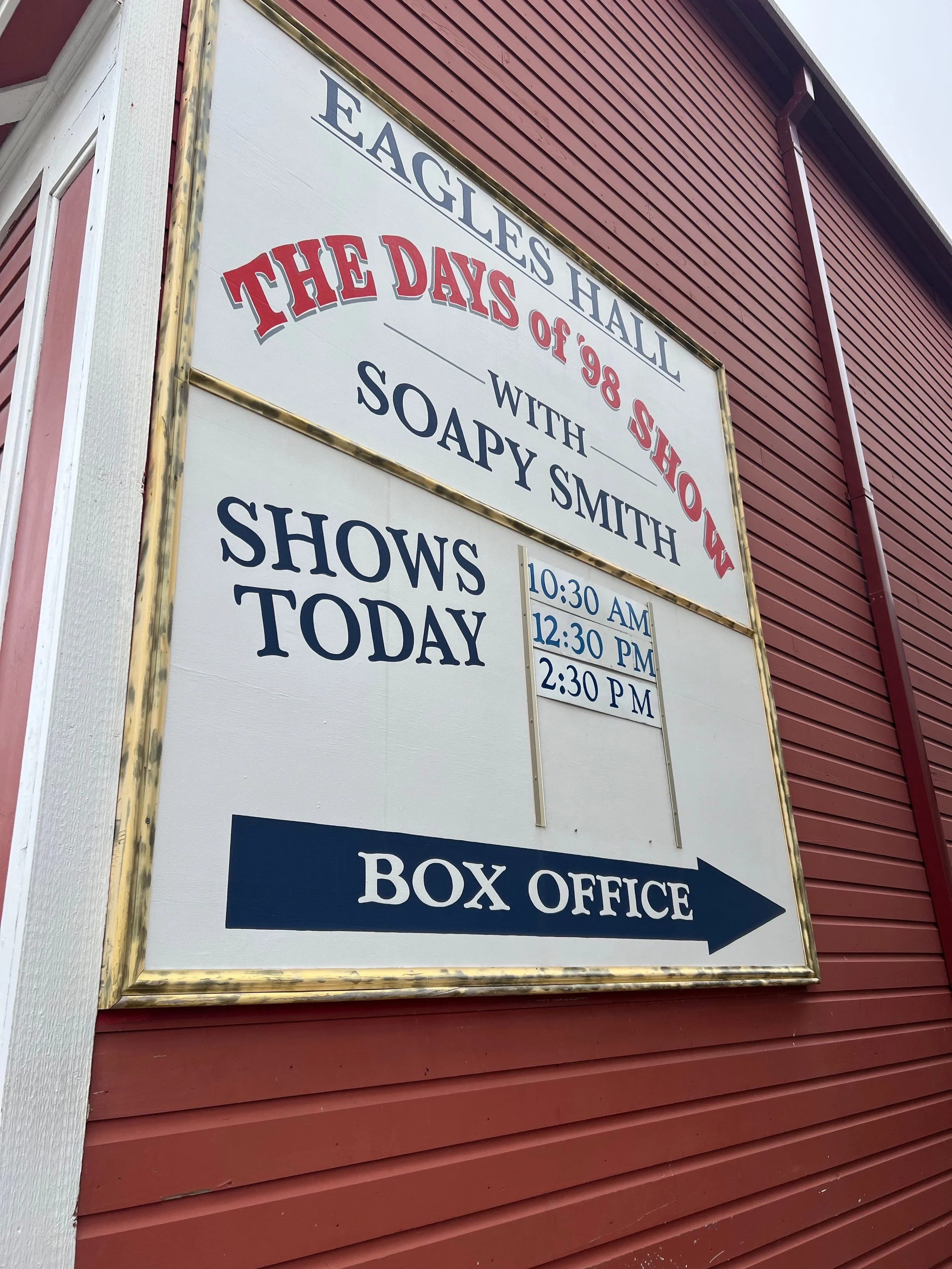
Why these two names still matter
Gold Rush Skagway was never just a rugged little staging town full of hopeful prospectors. It was also chaotic, opportunistic, and at times openly lawless. Skagway history materials describe the town as a gateway to the Klondike after the 1896 gold discovery near Dawson, with huge numbers of stampeders funneling through on their way north.
That kind of place creates outsized personalities.
And in Skagway, no personality looms larger than Soapy Smith.
But his name only tells half the story.
The other half belongs to Frank Reid, whose name is still inseparable from the moment Skagway began turning away from its roughest era. A historical reader published by the National Park Service describes Reid as a onetime member of Smith’s circle and ties the duel between the two men to a turning point in Skagway’s frontier days.
Soapy Smith: Skagway’s most notorious name
Jefferson Randolph “Soapy” Smith was not a miner. He was a con man.
He built power in places where crowds, money, and uncertainty created the perfect conditions for manipulation, and Gold Rush-era Skagway gave him exactly that. The National Park Service still describes him as a “notorious con man” during the stampede years in Skagway.
That matters because Soapy helps explain something essential about Skagway: this was not just a story of brave people chasing gold through the mountains. It was also a boomtown story. Sudden wealth. Sudden desperation. Fast arrivals. Thin institutions. The kind of environment where someone clever, charismatic, and ruthless could take hold quickly.
Soapy’s name endured because he embodied the town’s most volatile edge. He was not just a colorful side character in Skagway history. He represented what happened when a gateway town grew faster than law and order could keep up.
Even today, his name remains embedded in the visitor experience. The National Park Service notes that his grave is at Skagway’s Gold Rush Cemetery, one of the easiest historic sites for visitors to reach, and tourism history in Skagway has long kept his legend alive.
Frank Reid: the quieter name that matters just as much
Frank Reid is not always the first name visitors know before they arrive.
But he is one of the names that lingers once they start paying attention.
That is because Reid is tied to the moment the Soapy Smith chapter came to its end. National Park Service material describes the fatal duel between Smith and Reid in 1898 and frames Smith’s death as a turning point — effectively the peak and beginning of the end of Skagway’s frontier-lawlessness era.
Reid matters not because he was more famous than Soapy, but because his name marks the hinge in the story.
If Soapy symbolizes disorder, manipulation, and the feverish opportunism of Gold Rush Skagway, Reid symbolizes resistance to that world — or at least the breaking point of it. He is part of why Skagway history is remembered not only as a tale of dramatic ambition, but as a town struggling to decide what it would become.
That tension is still part of Skagway’s character now. Beneath the polished historic facades and visitor-friendly storefronts, there is still a trace of the harder, more volatile town that formed here first.
Why this story still defines the town
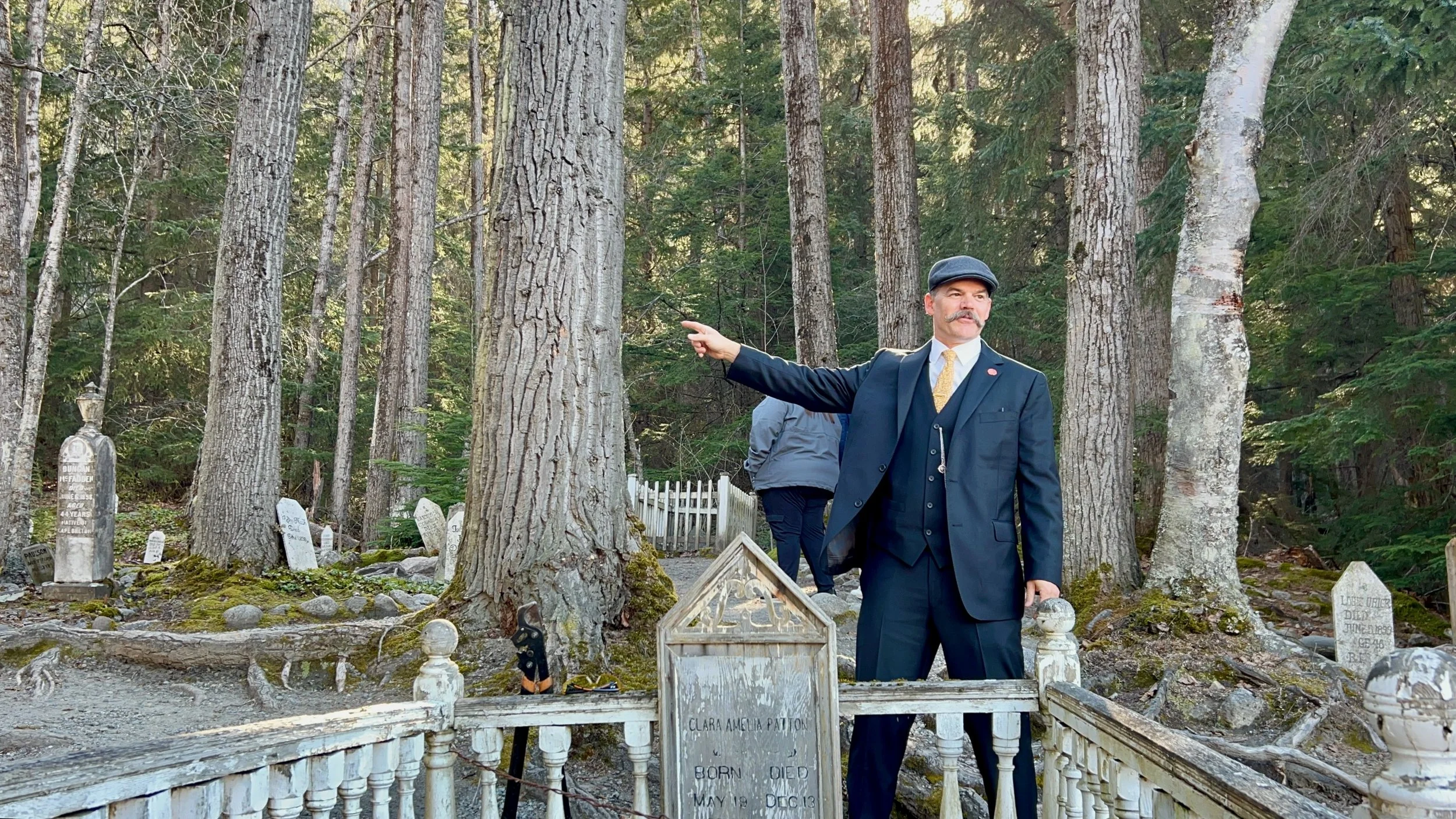
The story of Soapy Smith and Frank Reid lasts because it compresses the larger Skagway story into something human.
You have the rush of opportunity.
You have disorder.
You have spectacle.
You have violence.
And then you have a shift.
That is Skagway in miniature.
Official Skagway history still places the town at the center of the Klondike rush route after gold was discovered near Dawson in 1896, and the White Pass corridor, townsite, and historic district are preserved precisely because they mattered so much to that era.
But facts alone do not make people remember a place.
Stories do.
And in Skagway, these are still the two names that give the Gold Rush story its emotional shape.
What to notice when you are in Skagway
If you are walking Skagway now, it helps to remember that this town was not built only by scenery or nostalgia. It was shaped by pressure. By crowds. By greed. By hustle. By the collision between dreamers and opportunists.
That is part of why the town feels different from other Alaska ports.
It is not just pretty. It is storied.
And when you know the names Soapy Smith and Frank Reid, the place sharpens a little. The history stops feeling decorative. It starts to feel consequential.
You are not just walking through a preserved downtown.
You are walking through a former threshold town — one where thousands passed through, fortunes were imagined, scams were run, and a defining confrontation became part of local legend. Skagway history materials and NPS resources continue to preserve those Gold Rush layers for visitors today.
Final take
If Skagway still feels unusually vivid for a small Alaska town, this is part of the reason.
Soapy Smith gives Skagway its most infamous edge.
Frank Reid gives the story its turning point.
Together, they still define the version of Skagway that lives in the public imagination: not just a port, not just a photo stop, but a place shaped by ambition, conflict, and the raw instability of the Gold Rush.
And once you know their names, Skagway becomes more than charming.
It becomes legible.