Stories and guides for a more thoughtful Alaska trip.
Crafted by Mary Jacquel, from lived experience, original photography, and practical insight.
Perfect 1-Day in Juneau (Cruise Port Itinerary 2026): Map, Mendenhall & Photo Stops
Cruising to Juneau? Use this local’s 2026 hour-by-hour plan with map, Mendenhall options, realistic timings, and photo tips.
Map, realistic timing, and photo angles from a Juneau local.
I live in Juneau year-round and spend most weeks on these trails and inside passage waterways. Some days I’ll head down town and watch how the city actually flows with cruise schedules, weather, and daylight. I know when shuttle lines spike, which trails stay manageable in rain, and how long it really takes to get from the dock to Nugget Falls (with photo stops, bathrooms, and snacks baked in). I also scout the same shots you’re after - glacier blue, waterfalls, harbor scenes - so this itinerary reflects local timing, safe shortcuts, and a realistic pace you can enjoy without stressing about all-aboard.
Quick Look
Who this is for: Cruise passengers with ~4–8 hours in port
Best months: May–September (long daylight in June–July)
Today’s priorities: Mendenhall Glacier + Nugget Falls, a few downtown stops, and one add-on
Essentials: Waterproof jacket, comfortable shoes, portable charger, micro-fiber cloth for lens/phone
Back-to-ship buffer: Be at the dock 60–90 minutes before all-aboard
Helpful reads (link in editor):
• Getting Around Juneau Without a Car (2026 Update)
• Where to See & Photograph Bald Eagles in Alaska
• What to Pack for an Alaska Cruise (Local’s Guide)
• Skagway vs. Ketchikan — Which Port Next?
Tip: If you’re still choosing ports, I put together this guide to the best Alaska cruise ports through a photographer’s eyes
The Quick Plan (Choose A, B, or C)
Plan A: Glacier + Harbor (balanced)
09:00–12:00 Shuttle/taxi to Mendenhall Glacier; walk to Nugget Falls; quick visit at the Visitor Center.
12:30–13:15 Lunch near the waterfront.
13:30–15:00 Downtown walk: storefront textures + boardwalk.
15:15–16:30 Harbor golden-hour scouting; eagle chances on pilings.
Plan B: Wildlife-first
09:00–12:00 Whale-watching (Auke Bay).
12:45–13:30 Lunch.
13:45–16:00 Mendenhall “express” stop or downtown gems loop if weather turns.
Plan C: No excursions or vehicle, no problem (walkable loop)
09:00–11:30 Downtown + harbor textures; museum stop if raining.
11:45–12:30 Lunch.
12:45–14:15 Short viewpoint/hike with quick transit; 15:00 shopping/coffee; head back.
The Map
Dock → Downtown loop (coffee + quick photo stops)
Mendenhall Glacier (Visitor Center + Nugget Falls trail)
Optional add-on (Auke Bay whale watch or Mount Roberts Tram or museums) → Dock.
Transit windows: Taxi/shuttle to Mendenhall is typically 20–30 min each way; Auke Bay similar.
Buffer: Keep a 60-minute cushion before all-aboard.
Hour-by-Hour Itinerary
0:00–0:30 — Dock, Coffee, Orientation
Disembark with daypack; set an alarm for all-aboard minus 90 min.
Grab a quick coffee downtown (2–5 min walk depending on which berth your ship is at)
First photo frames: harbor boardwalk, mountain lines, working boats.
Photo tip: Shoot toward the channel for layered peaks; step to the dock’s side to avoid harsh backlight.
0:30–1:45 — Transit to Mendenhall (Pick your ride)
1:45–3:45 — Mendenhall Glacier + Nugget Falls (Unmissable)
Visitor Center (15–25 min): Orientation, exhibits, overlook.
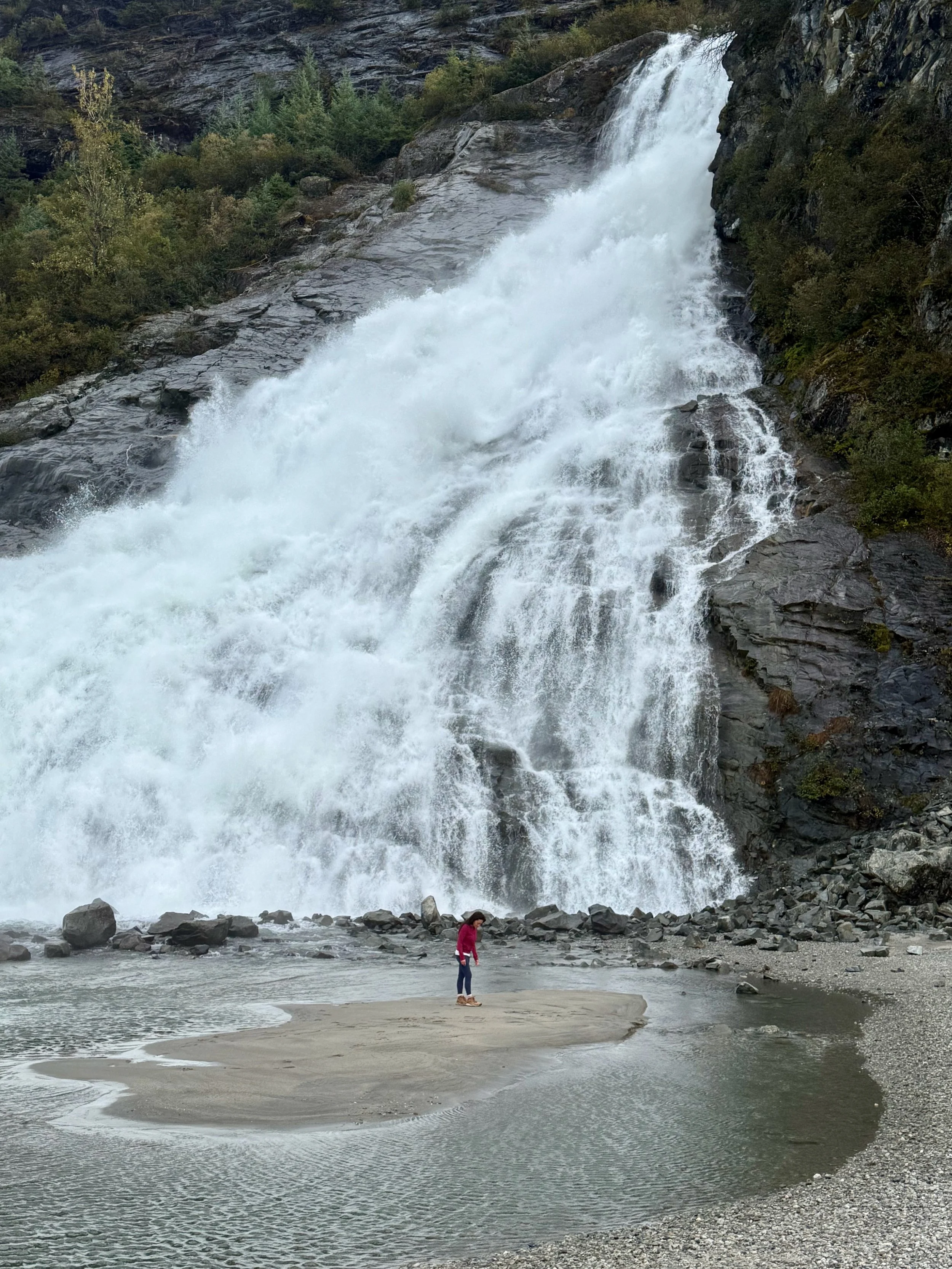
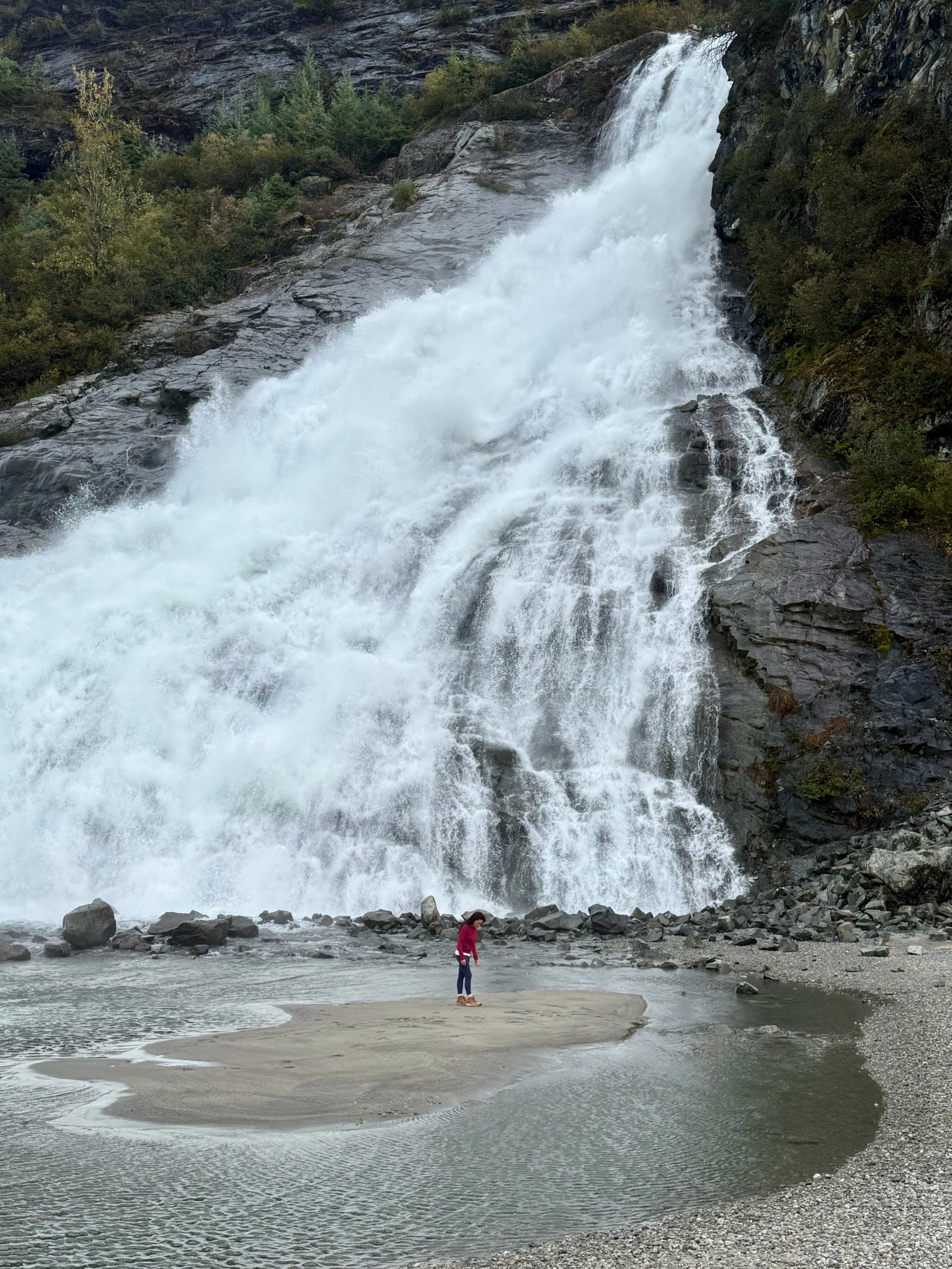
Nugget Falls Trail (40–60 min RT): Flat, well-marked, spectacular mist (one of my favorites!)
Photo Overlook (15–25 min): For wider glacier frames and fewer people.
Short on time? Prioritize Nugget Falls—most drama per minute.
Photography quick start:
Water blur: 1/5–1/15 sec with stabilization (or phone Live → Long Exposure).
Glacier blue: Tap-expose for highlights on the ice; avoid blowing whites.
People for scale: Place a person (safe distance) near the falls.
Facilities: Restrooms near the Visitor Center; refill water here.
3:45–4:30 — Lunch Strategy
Track A — Quick & Close: Fast bite to extend glacier time or make an add-on.
Track B — Back Downtown: Head toward the waterfront and eat near the dock (ideal if all-aboard is tight). Below are a couple of options (all within walking distance of the pier).
Hanger on the wharf: Inside the blue building; a local staple.
Twisted Fish Company: If you’re looking for seafood (& who isn’t while in Alaska?!)
4:30–6:30 — Choose ONE Add-On
Mount Roberts Tram (easy views) — 60–90 min
Instant alpine feel, boardwalks, eagle exhibits, channel panoramas.
Photo: frame your ship from the overlook for a signature “we were here” image.
Whale Watch (Auke Bay) (wildlife) — 3–4 hrs door-to-door
High chance of humpbacks in season; orca possible.
Stand outside for a minute when the captain calls; listen for blows first.
Museums & Galleries (weather-proof) — 60–90 min
Alaska Native art, Gold Rush history, local makers.
Great place to support local—consider a small print or jewelry piece.
6:30–All-Aboard — Easy Wind-Down + Buffer
Stroll the boardwalk back to the ship. If security lines look long, you’re still calm.
Rain plan: Keep Mendenhall (better falls!), choose Tram + museum, and skip long outdoor add-ons.
Costs at a Glance
Shuttle: $$ (pp, round-trip)
Guided tour: $$–$$$ (often glacier + 1 more stop)
Tram: $$
Whale watch: $$$–$$$$ (check exact duration vs. port time)
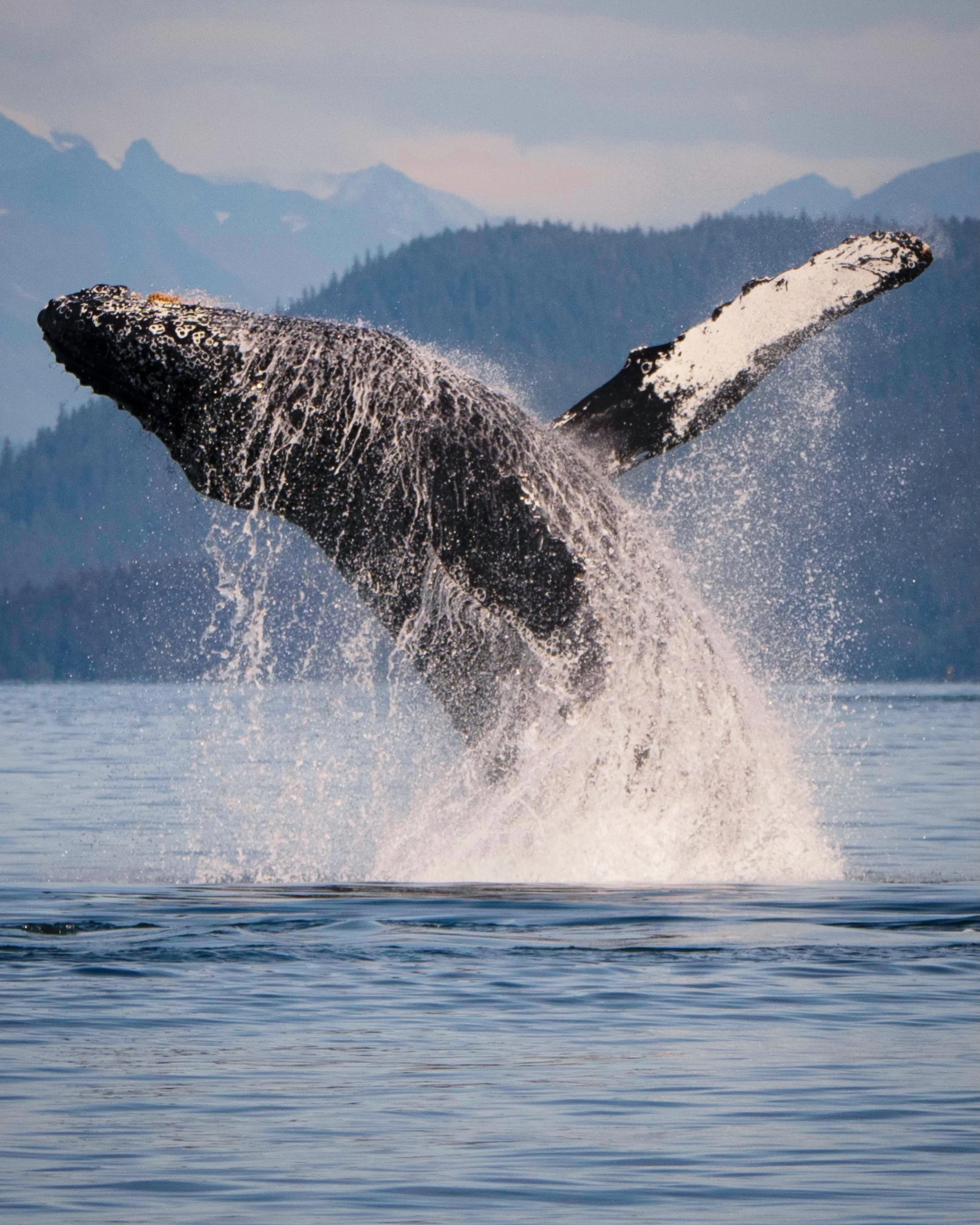
Photography Notes (Local Angles & Settings You’ll Love)
Angles you’ll kick yourself for missing
Nugget Falls, side angle: Stand left of the main crowd; include spray + hikers for scale.
Harbor pilings + eagle: Pre-focus on the piling; wait for the bank-and-flare.
Boardwalk reflections: After a drizzle, go low; use storefront color bands.
Camera quick-start
Glacier/waterfall: 1/320s, f/8, ISO 200; add ND for silky water.
Eagles in flight: 1/2000s, AF-C/AI-Servo, single point on beak line.
Harbor details: f/4–5.6 for subject isolation; polarizer to cut glare.
Accessibility & Pace Notes
Nugget Falls trail is generally flat with packed gravel; allow extra time for mobility devices and wet conditions.
Summer crowds can slow pathways—add 10 extra minutes per leg.
If You Have Only 4–5 Hours
Dock → Shuttle → Nugget Falls → quick Visitor Center peek → Shuttle → Waterfront lunch → Ship.
Skip add-ons, keep the 60–90 min buffer.
If You Have 8–10 Hours
Add the Tram or a Whale Watch—not both.
Or linger at Mendenhall with a second trail and a relaxed late lunch.
FAQ
How long do I need at Mendenhall Glacier?
About 2 hours for Visitor Center + Nugget Falls. Add 30–60 minutes for the photo overlook or a slower pace.
Can I do whale watching and Mendenhall in one day?
Yes—if your port call is long, you book fixed times, and you keep meals near your transit nodes.
What if rideshare is thin the day I’m in port?
Use the taxi/shuttle queues near the dock. If lines surge, flip to the walkable downtown loop (Plan C) and keep your buffer.
What if it rains all day?
Keep Mendenhall (rain makes the falls dramatic), add Tram + museum, and use cafes for steamy-window portraits between showers.
What are realistic photo goals in just one day?
Aim for three anchors: a glacier scene, a harbor reflection, and one wildlife or detail shot.
Before You Go (From My Alaska Shop)
See this scene as a print: Soaring Eagle
Orcas: artwork
Warm up after the day: Explore my Alaska-inspired teas → Alaska Tea Co
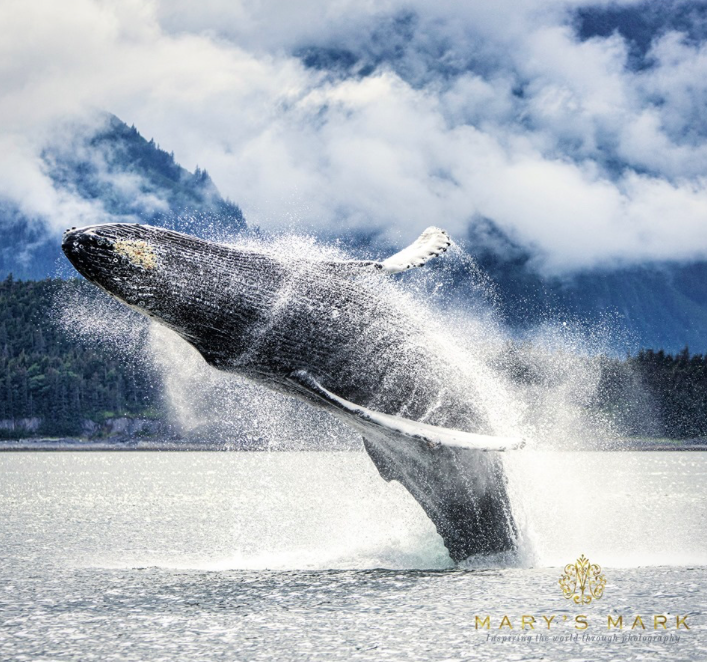
Humpback Whale Breaching in Juneau, Alaska | Wildlife Photography
One of the biggest surprises of my life has been how much I have enjoyed photographing Humpback whales. Going into my summer in Juneau, Alaska, my goal was to capture landscape photographs. However, when I was spending time on the water fishing for halibut and salmon, I started noticing humpback whales coming up for air and found myself gazing at them until they showed their flukes and dived to the depths of the ocean. These gentle giants grabbed my heart and ever since, I have been hooked trying to photograph them in an effort to tell their story.

Wildlife photograph of a humpback whale breaching in Juneau, Alaska
Photographing Humpback Whales in Juneau Alaska
One of the biggest surprises of my life has been how much I have enjoyed photographing Humpback whales. Going into my summer in Juneau, Alaska, my goal was to capture landscape photographs. However, when I was spending time on the water fishing for halibut and salmon, I started noticing humpback whales coming up for air and found myself gazing at them until they showed their flukes and dived to the depths of the ocean. These gentle giants grabbed my heart and ever since, I have been hooked trying to photograph them in an effort to tell their story.
Challenges of Photographing Humpback Whales
One of the hardest parts about photographing humpback whales is the patience it takes. Just like any other wildlife photography or action shots, it’s hard to have the discipline to be laser-focused and ready to photograph a breaching whale after you have been observing them for several hours. Often times, whales will breach without warning and they only breach one time.
The weather conditions are another factor. In Southeast Alaska, it can rain a lot bringing gloomy, dark clouds and unforgiving, relentless seas that seem to take aggressive slaps at your boat. These conditions are tough to be out in (make sure you have great rain gear!) but they also make photographing action shots pretty challenging. There’s not much you can do when there is rough weather which is why having a lot of patience can help.
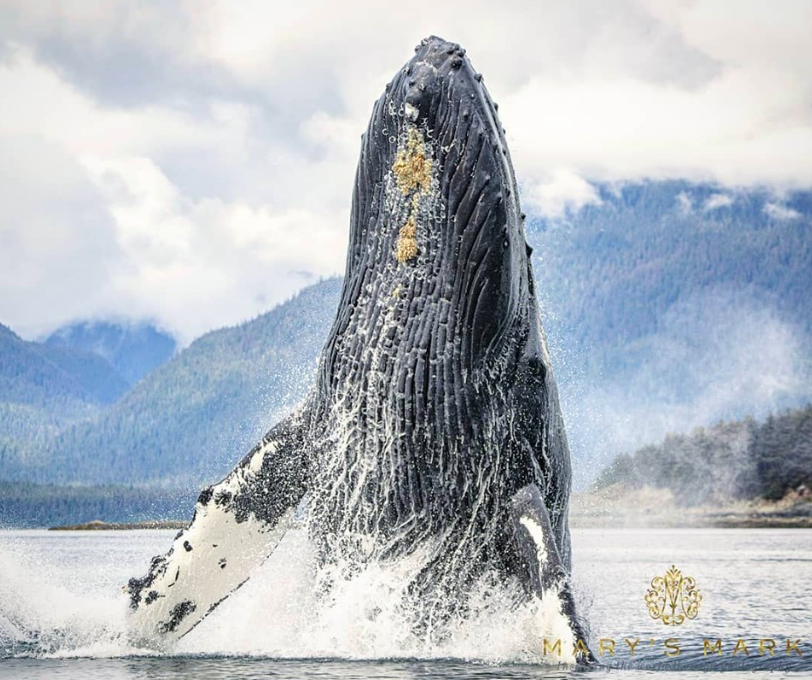
When do Humpback Whales Breach?
I get this question a lot from other photographers. If I knew when a humpback would breach, I would absolutely tell other wildlife photographers and enthusiasts. Sadly, I haven’t figured out when they will breach (and there are several ideas out there on what makes a humpback breach). I can tell you that I have witnessed them breaching when there has been ‘abnormal’ activity near the surface of the water.
For example, usually a humpback will blow steam at the surface of the water. This is usually how we first spot them. Then, they slowly roll close to the surface for 3-4 times showing their dorsal fins and then blowing steam. Usually, on their last steam blow, they will make a deeper dive resulting in a fluke surfacing before disappearing for a few minutes.
If this pattern is interrupted, such as they smack their fins on the water or start crashing the surface with their fluke (see below), this seems to indicate that something is ‘abnormal’. When I see this behavior, I get pretty excited because this is the type of behavior that I see before a whale breaches (in my experience only).

Humpback Whale smacking its tail on the water
Which Camera Lens Do You Use
The second biggest question I get is this one. Whale watching boats and all water crafts must remain at least 200 yards away from humpback which means that having a high-powered lens is crucial for grabbing close-ups. In addition to using a 150-600 mm lens, I also add a Sigma teleconverter which helps give me the reach that I need. I’m still experimenting with equipment but here are a couple of items that I have used:


Comments or questions regarding photographing humpback whales? Feel free to reach out in the comment section below or send me a direct message and I would be happy to help!
I’m so glad you’re here.
This is a cornerstone of Alaska-inspired stories, photography, and small rituals - for people who want to travel, and live, with more intention.
Written from Juneau, Alaska by a photographer who lives here.